FIREPLACE SAFETY
Wood-burning inserts in factory-built fireplaces: the risk hiding behind your walls
They’re common across Tahoe homes and cabins, and many have run for years without a problem. Here’s why we no longer recommend them, and what to do if you have one.
By Patrick Krol · Tahoe Chimney & Fireplace
Walk into almost any Tahoe-area home built in the 1970s through the 2000s and there’s a good chance the fireplace isn’t masonry at all. It’s a metal box, built in a factory and framed into a wood chase. And in a lot of those homes, someone has since slid a wood stove insert inside it to get more heat.
It looks like a smart upgrade. The problem is what it does to the parts of the house you can’t see.
Masonry vs. factory-built: which do you have?
This whole issue only applies to factory-built fireplaces, so the first step is knowing which kind is in your home. Here are two real fireplaces we’ve serviced, with the giveaways marked.
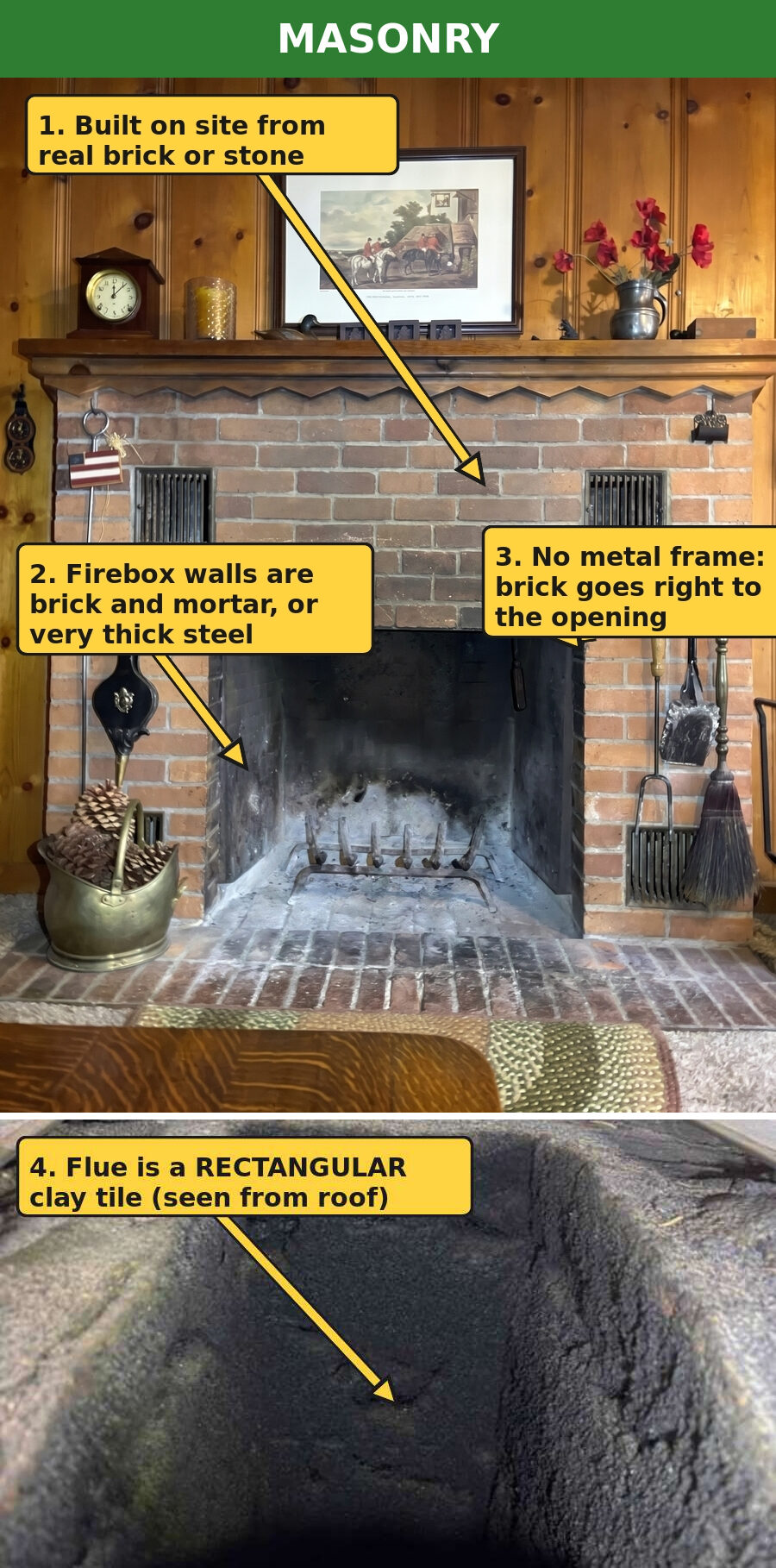
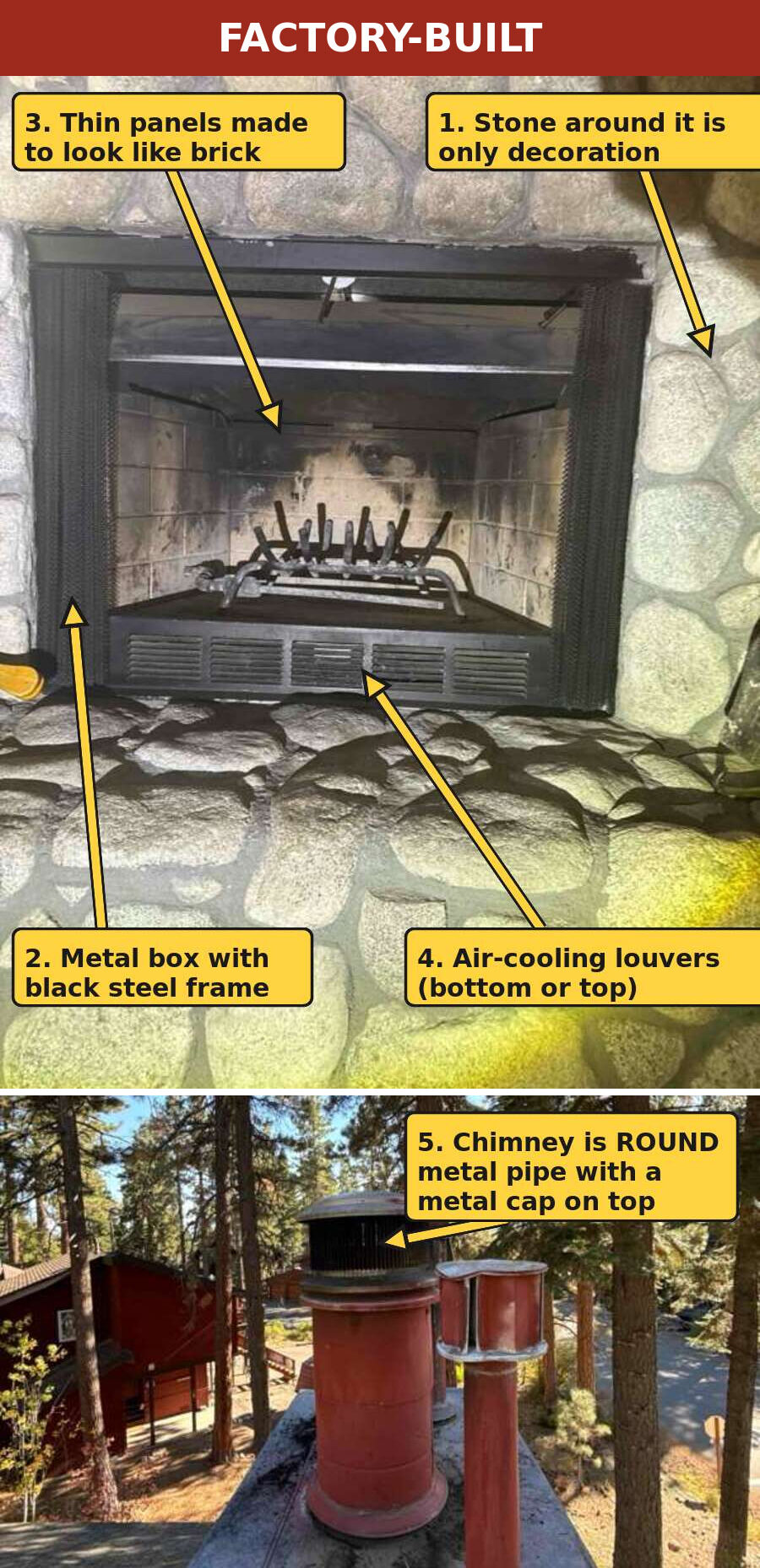
Tap a photo to see it full size.
Masonry fireplace
- Built on site from brick, block, or stone
- Firebox walls are brick and mortar, or very thick steel
- No metal frame or louvers around the opening; the brick or stone runs right up to it
- From the roof, the flue is a rectangular or square clay tile (for example 8×13 or 13×17 inches)
Factory-built (also called prefab or zero-clearance)
- A metal box, usually with a black steel frame around the opening
- Thin refractory panels inside, often made to look like brick
- Air-cooling louvers at the bottom or top of the unit, and a metal label plate near the opening or behind the screen
- From the roof, the chimney is a round metal pipe, usually inside a wood-framed chase, with a metal cap on top
A stone or brick facing doesn’t tell you much. As the photo on the right shows, plenty of factory-built fireplaces are dressed up with stone on the outside. The hearth in front doesn’t tell you either: a brick or stone hearth can sit in front of both types. The quickest tell is the flue: rectangular clay tile means masonry; a round metal pipe almost always means factory-built. If you’re not sure, a chimney professional can tell you in a few minutes.
Why an insert is a problem in a factory-built fireplace
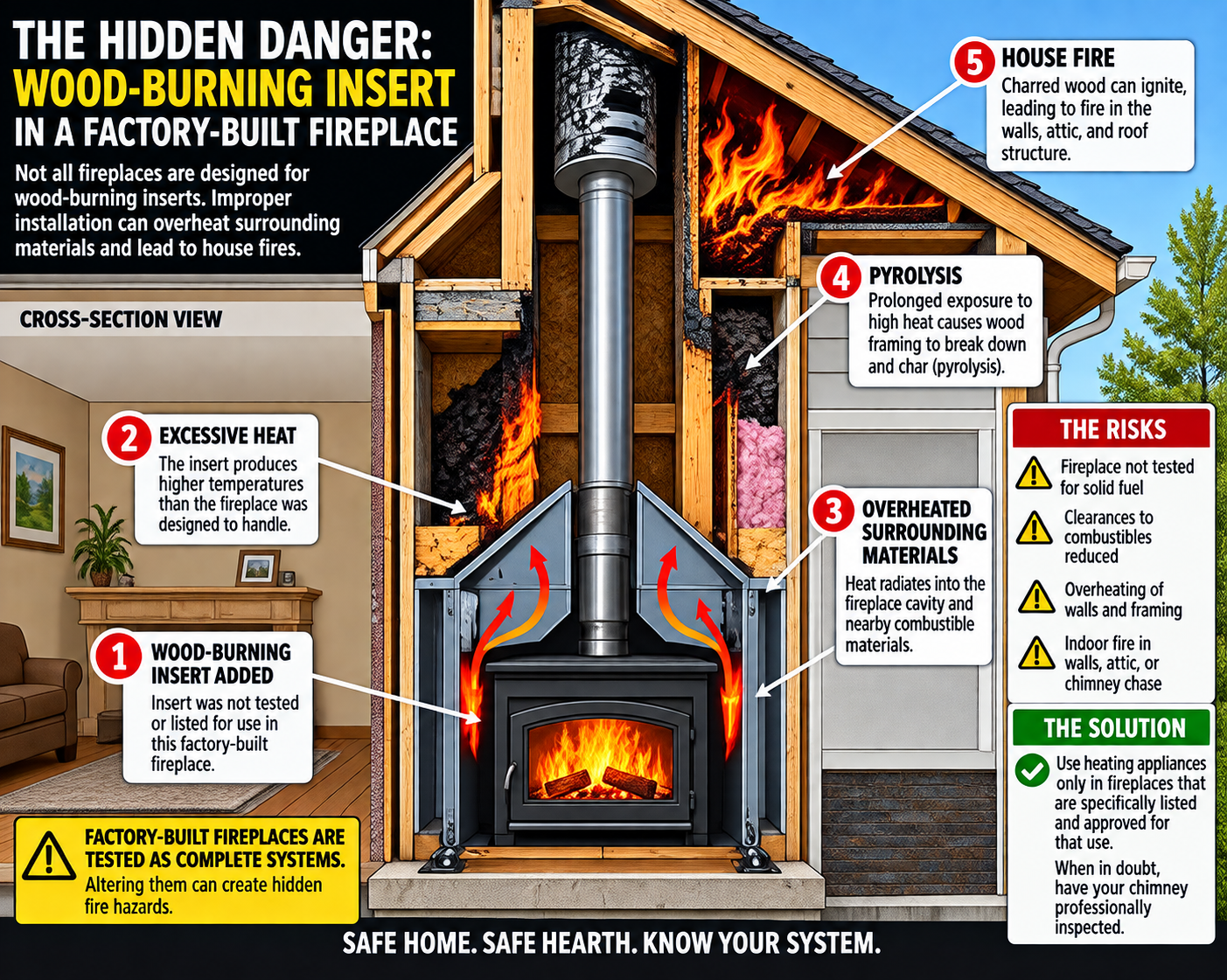
A factory-built fireplace is tested and listed as a complete system, designed to burn an open fire within its own firebox and chimney. It was never tested to hold the added weight, heat, and concentrated exhaust of a wood stove placed inside it.
An insert is designed to hold heat and radiate it. Tucked inside a metal fireplace, that heat builds up in the space between the insert and the fireplace walls, and in the metal shell and chimney beyond. Those parts were built with specific, tested clearances to the wood framing around them. Add a stove inside, and those clearances were never checked for the new conditions.
There is no safety standard for this combination
There is currently no safety standard for testing a wood insert and a factory-built fireplace together. A standard intended to address it (UL 1391) has been in development for years and has still not been published. For decades, these installations have relied on individual manufacturer instructions rather than on testing of the insert and fireplace as a pair.
Slow heat, hidden damage
When wood framing is exposed to elevated heat over and over, season after season, it slowly dries out and chars. This process is called pyrolysis. The charred wood can ignite at lower temperatures than fresh lumber, which means a fire that burned fine for years can one day be the one that starts something.
Because the heat from these systems is concealed behind walls and inside the chimney chase, problems can go unnoticed until damage has already occurred.
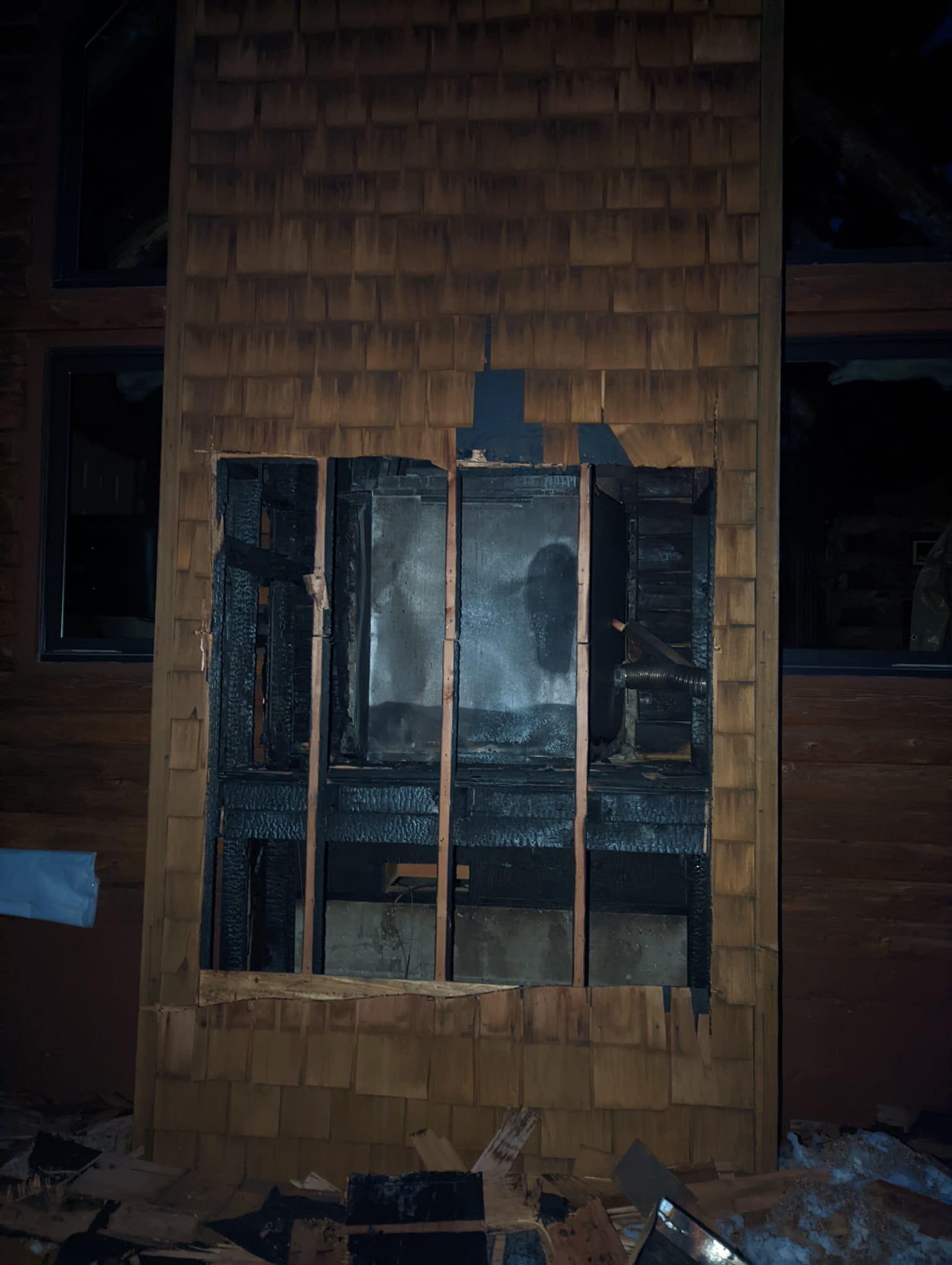
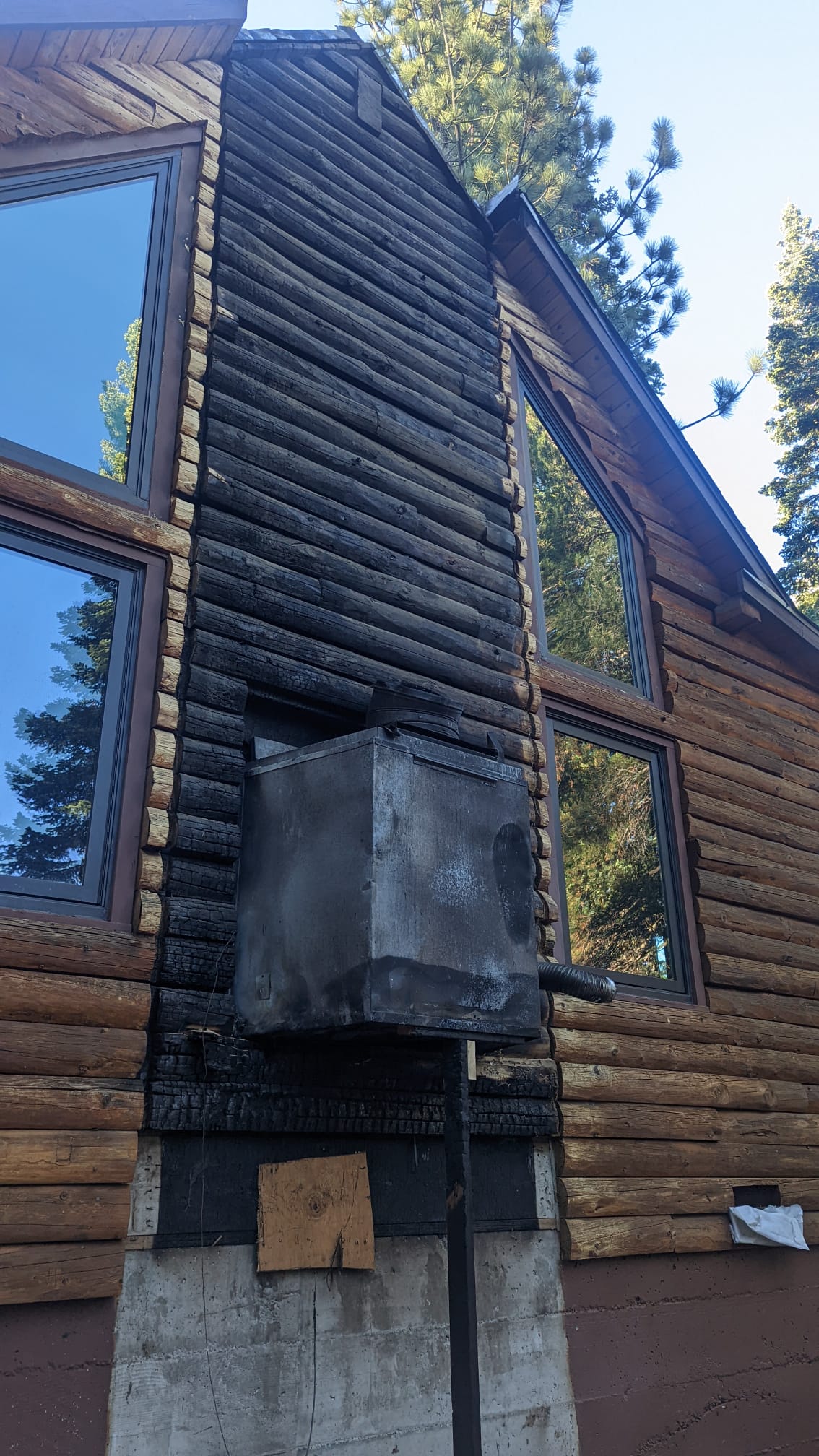
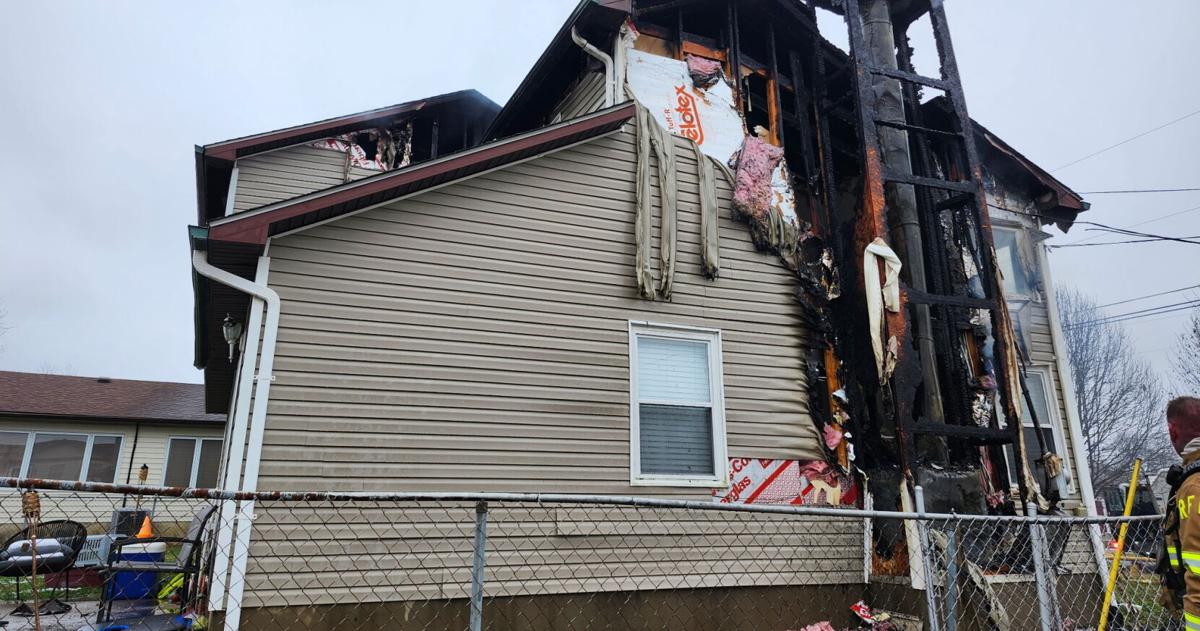
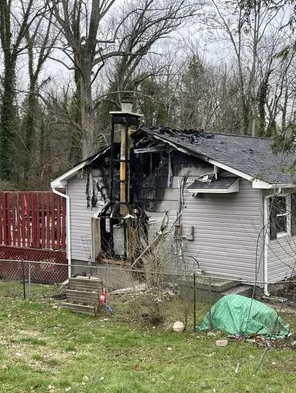
This isn’t just a drawing. These photos are from a zero-clearance fireplace chase. From the outside, nothing looked wrong. Once the siding came off, the framing around the fireplace was charred black.
Warning signs worth a closer look
Most of the damage is out of sight, so the absence of warning signs doesn’t mean everything is fine. But call a professional if you notice any of these:
- Discoloration, scorching, or peeling paint on the wall, mantel, or facing around the fireplace
- Walls near the fireplace or chase that feel unusually warm during a fire
- A smoky or burnt-wood smell when the fireplace isn’t being used
- Warped metal, cracked refractory panels, or gaps around the fireplace opening
- Soot or staining on the outside of the chase or around the chimney cap
If you have this setup and it’s worked for years
We get it. Many of these systems have been used for a long time, heat well, and their owners are happy with them. We don’t want to take away from that. Our goal is simply to lay out what’s known about these installations and what your options are, so you can make the decision that’s right for your home.
Your options
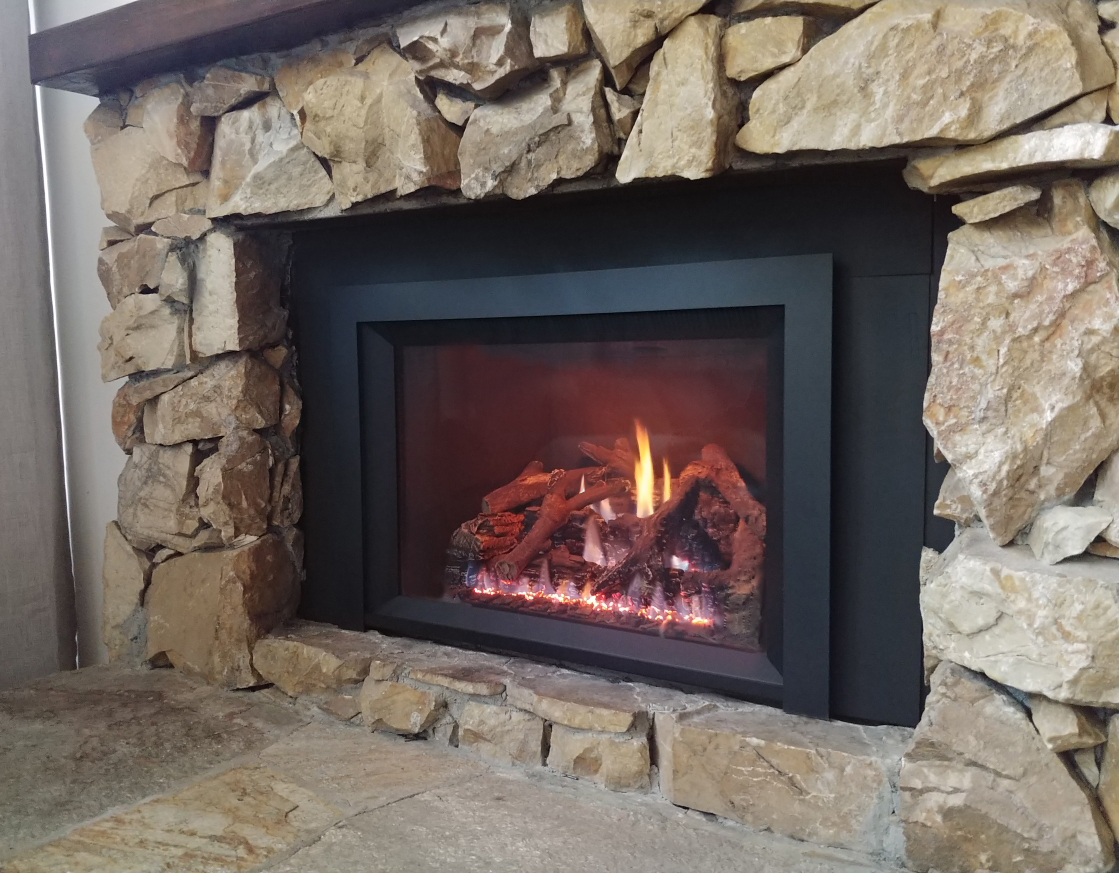
Gas insert listed for factory-built fireplaces
Typically $8,000–$9,500 · usually a one-day job
For a factory-built fireplace, the insert option we recommend is a gas insert specifically listed for use in factory-built fireplaces. We do not recommend installing a new wood-burning insert into a factory-built fireplace.
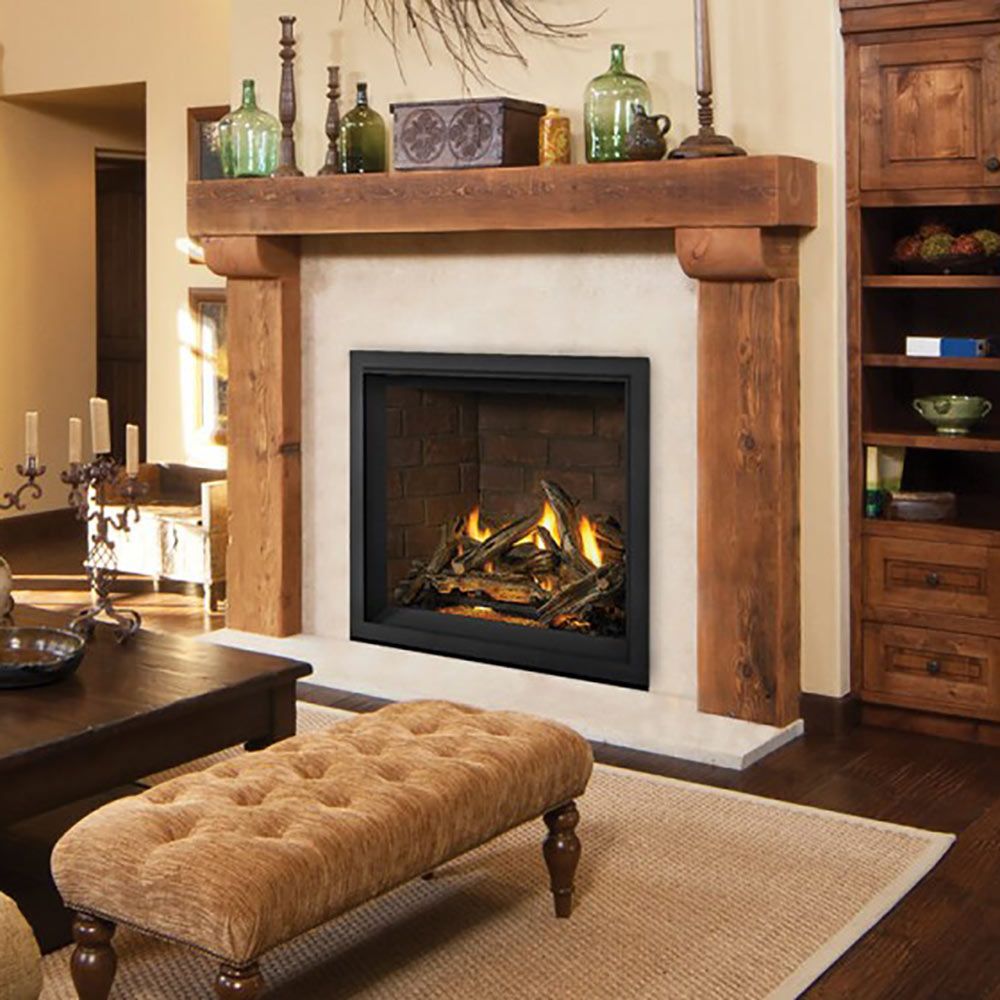
New gas fireplace
Remove the old factory-built fireplace and chimney and install a new, listed gas fireplace with matching venting, designed and certified to work together as a complete system. You get a larger viewing area and more design choices than an insert.
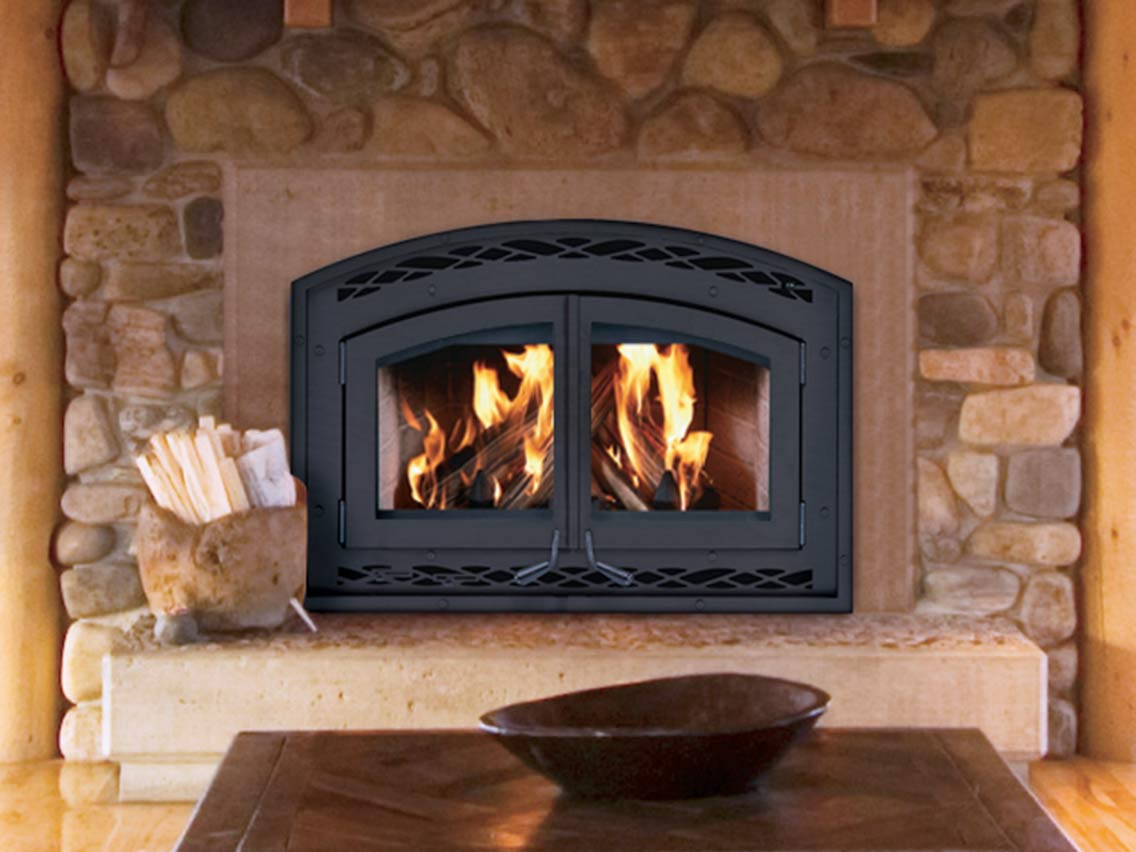
New wood-burning fireplace
If you want to keep burning wood, the right way is to replace the whole system with a new, listed wood-burning fireplace and matching chimney, tested and certified together. Modern units like the Majestic WarmMajic II are EPA 2020 certified, burn cleaner, and heat far better than older open fireplaces.
Why gas is an upgrade
Sealed combustion
Draws air from outside and vents exhaust outside through a sealed system, keeping combustion gases out of the living space.
More efficient
Far more of the heat stays in your home instead of going up the chimney.
Safer
No sparks, embers, or creosote buildup, and no firewood to store or haul.
Easy for anyone
On and off with a button or remote. Guests, renters, and family can enjoy a fire with no experience building one.
Rental-friendly
For vacation rentals, the fireplace becomes a guest amenity instead of something that has to be locked out.
Clean and low-maintenance
No ash, smoke, or soot in the room.
Adds value
An updated, efficient fireplace is an attractive feature for owners, guests, and future buyers.
A better experience
A realistic flame, clean glass, and a finished look that becomes the focal point of the room.
Common questions
My insert was installed by a professional. Doesn’t that make it safe?
Not necessarily. Many of these were installed carefully, following the insert manufacturer’s instructions at the time. The issue isn’t the workmanship. It’s that the combination of an insert and a factory-built fireplace has never been tested as a system, so no installer can confirm how the hidden framing is holding up over years of use.
It’s worked fine for years. Why change now?
Heat damage to framing builds up slowly. Years of trouble-free use don’t show that the wood behind the walls is fine; the charring we find usually happened over many seasons without any visible sign in the room.
Can I just stop using it?
Yes. If you’re not ready to make a change, not burning in it removes the risk from heat. Many people choose that until they decide on a replacement.
Can you put a new insert in my factory-built fireplace?
We don’t recommend it unless it’s a gas insert listed for use in factory-built fireplaces. If you want to keep burning wood, we recommend replacing the whole system with a new wood-burning fireplace and chimney that are listed to work together.
Not sure what you have?
We’re happy to take a look at your fireplace, tell you what you’ve got, and walk you through your options.
Call (530) 414-7600Email us
Tahoe Chimney & Fireplace · NFI · CSIA · HeatShield Cerfractory Certified
CSL #949777 · NV Lic. #0084665 · P.O. Box 9526, Truckee, CA 96162
530-414-7600 · patrick@tahoestoves.com
