
CHIMNEY SAFETY
Old Metalbestos chimney pipe: what the white rings mean
If your inspection found that your insulated chimney pipe is leaking its insulation at the joints, here is what that means, why it matters, and what to do about it.
By Patrick Krol · Tahoe Chimney & Fireplace
What Metalbestos pipe is
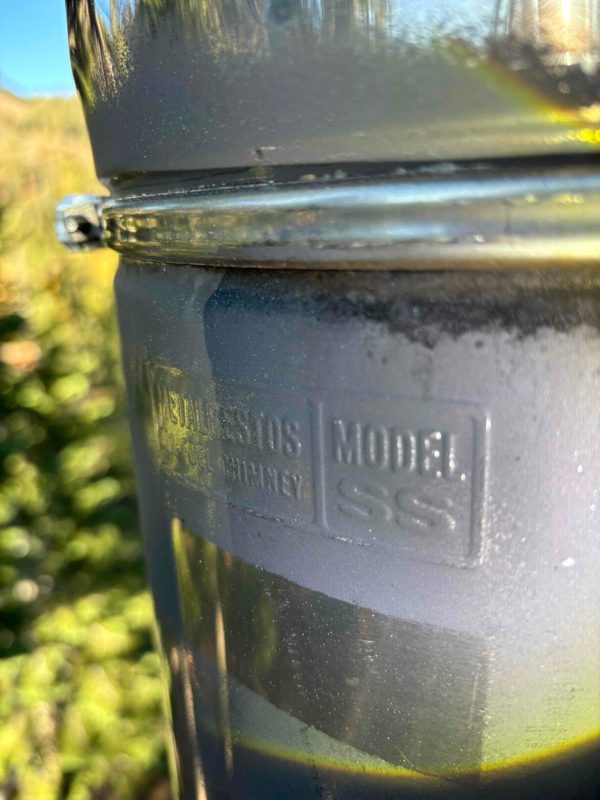
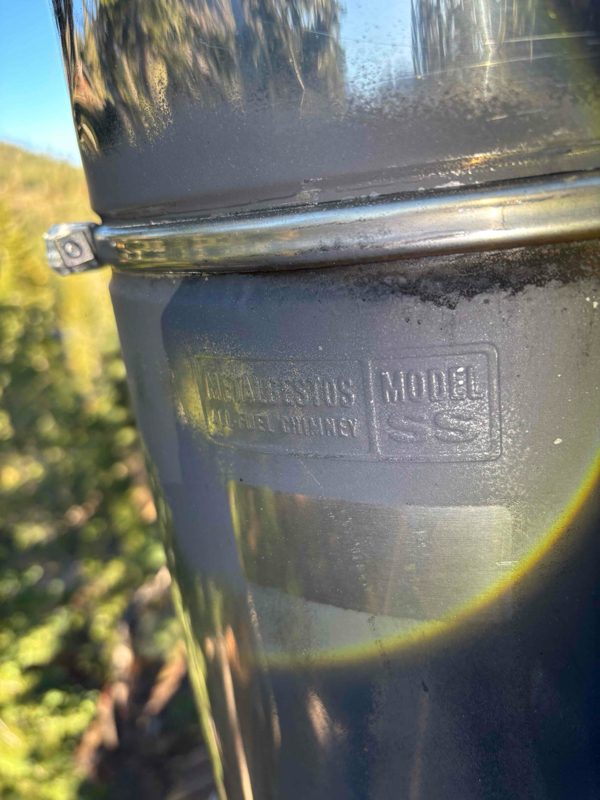
Metalbestos is Selkirk’s brand of insulated, double-wall stainless chimney pipe (a “Class A” chimney). Older pipe of this type was “solid-pack”: the space between the inner and outer steel walls was packed with loose silica insulation, a fine white powder.
That insulation is what lets the chimney pass safely through ceilings, attics and roofs, only a couple of inches from wood framing. It keeps the outside of the pipe cool enough for the wood next to it.
What the white rings are
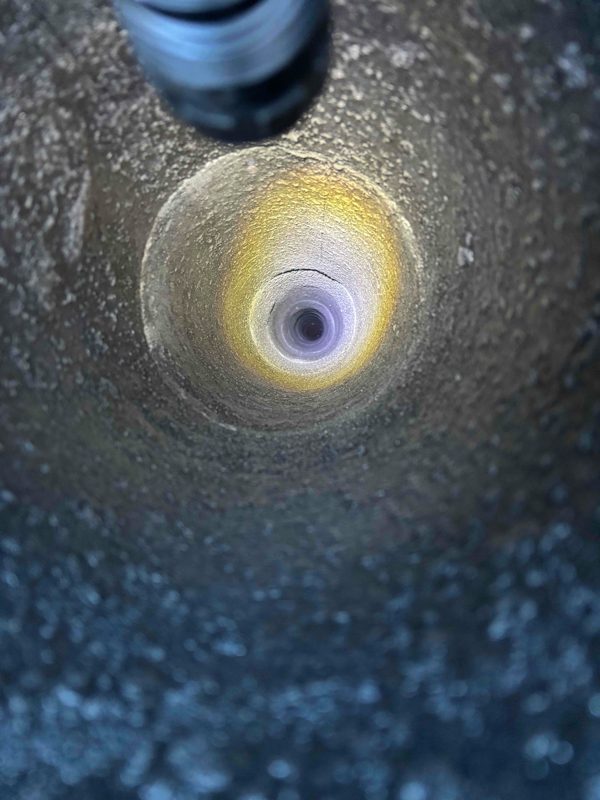
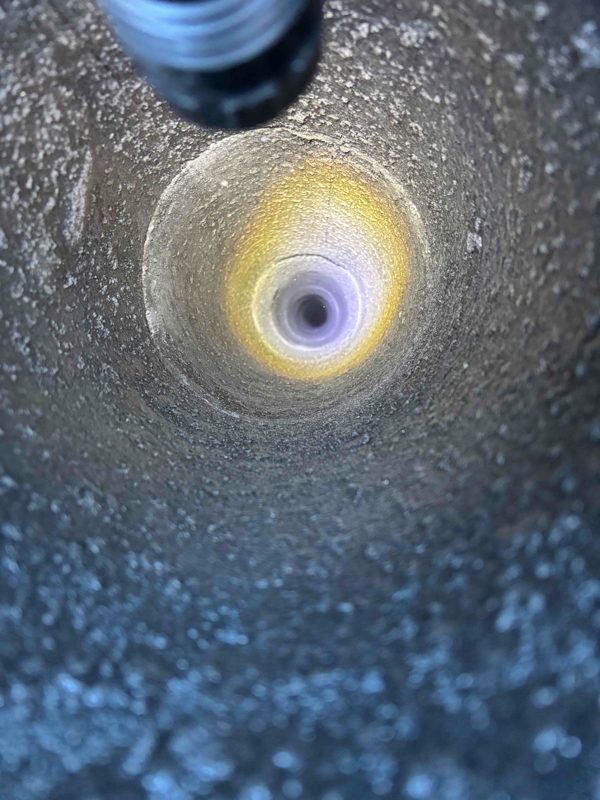
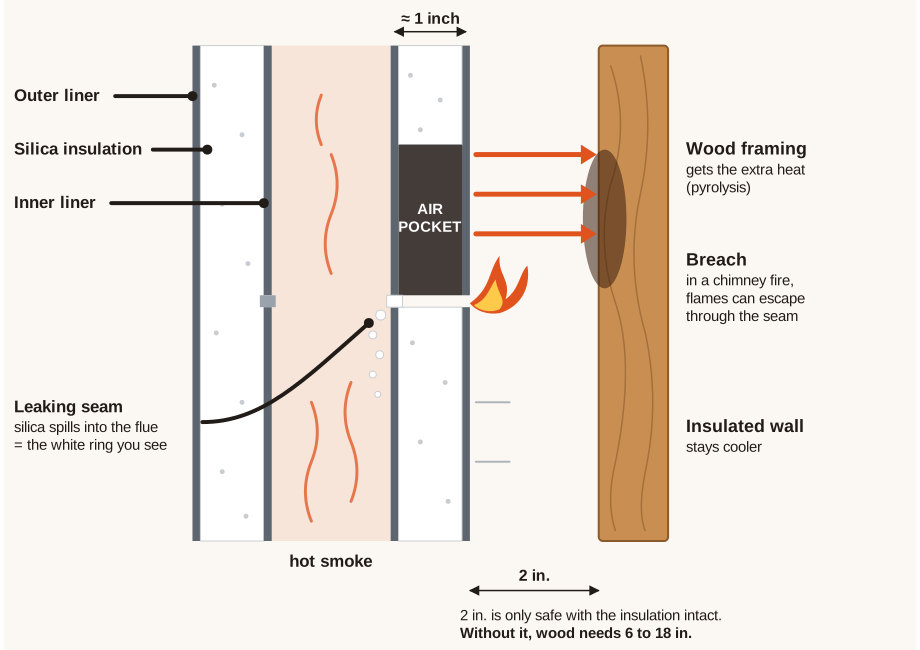
A healthy pipe is smooth stainless steel inside. When the inner wall separates at the joints, the silica insulation starts leaking out of the seams into the flue. Looking up the chimney, you see it as a white ring at each joint.
Why it’s dangerous: air pockets and hot spots
Every bit of silica that leaks out of a seam leaves an empty space in the wall of the pipe above it. The insulation settles down into the gap, and an air pocket forms higher up. Where there is an air pocket, nothing stops the heat. That spot on the outside of the pipe gets much hotter than it was designed to, and if wood framing, a ceiling joist or a roof board is close by, that wood takes the heat.
Insulated pipe is allowed just 2 inches from wood only because the insulation is there. Without it, 2 inches is not enough: wood needs 6 to 18 inches from an uninsulated pipe.
Hidden fire
A hot spot next to framing can start a fire inside a wall, ceiling or attic, where nobody sees it until it’s serious.
Sparks and flames at the seams
In extreme cases, a badly separated joint can let sparks or even flames out through the seam during a hot fire.
Deformed pipe
If the inner pipe is badly bulged or warped, smoke tumbles and cools, and creosote can build up much faster.
Black streaks on the outside of the pipe
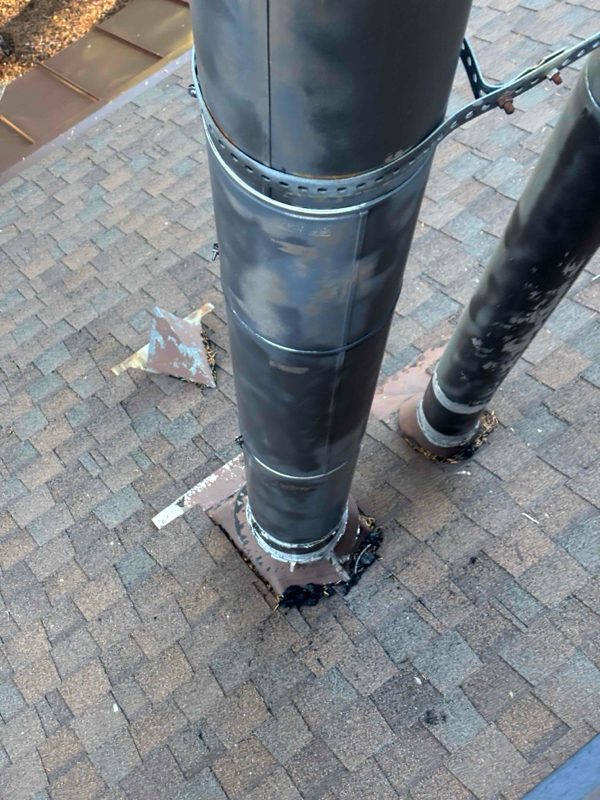
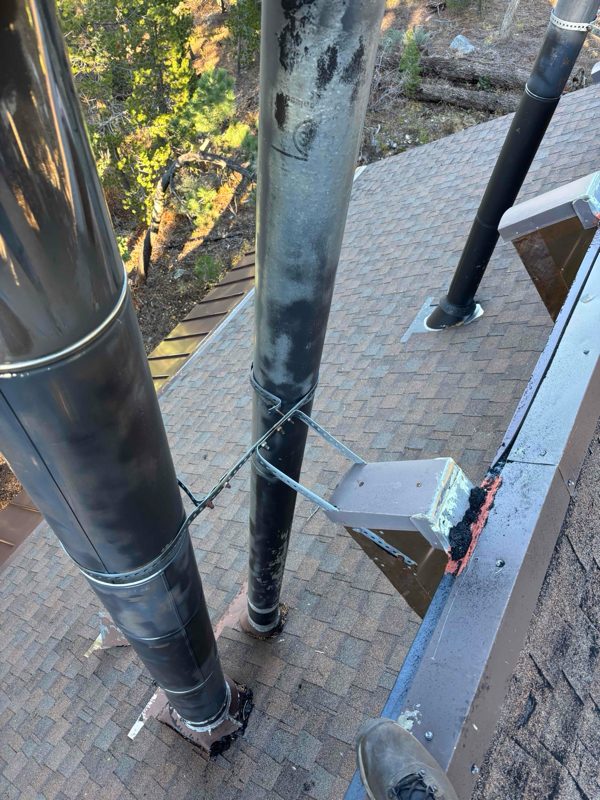
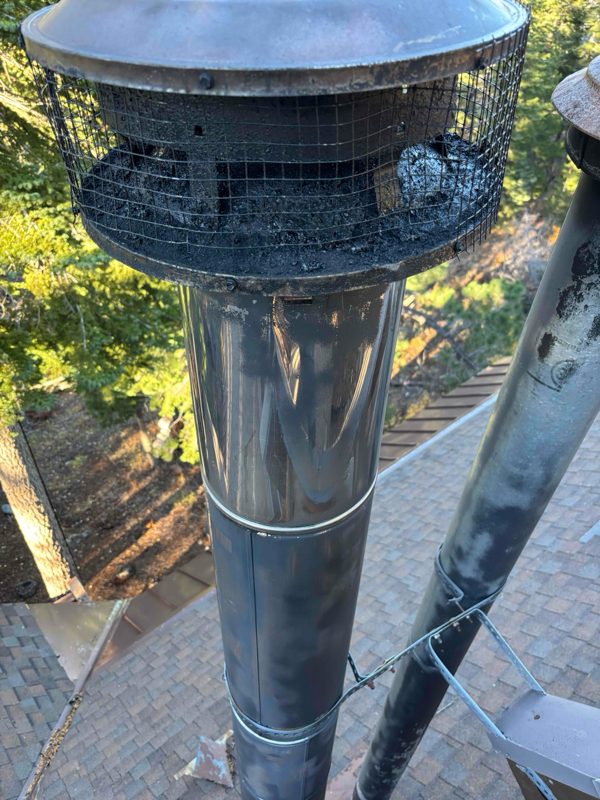
When you see black streaks running down the outside of the pipe from a joint, the pipe has been breached. It means there was a chimney fire: the heat liquefied the creosote inside, and the pressure pushed it out through the seams. That creosote is acidic, so it eats at the steel as it runs down, and it is also flammable.
What about asbestos?
“Metalbestos” is a brand name, and the name alone does not mean asbestos. In general:
Either way, asbestos is not the main issue here. Sealed between two steel walls, the insulation stays put. The real danger is the air pockets and hot spots described above. When we replace the pipe, we remove the old sections carefully, keeping them intact and contained, so nothing is spread around your home.
What to do now
- Stop using the stove or fireplace until the chimney pipe is replaced.
- Don’t take the pipe apart or sweep up the white powder yourself. Leave it for us.
- Make sure you have working smoke and carbon monoxide alarms on every floor.
- Schedule the replacement. We carefully remove the old pipe and replace it with new insulated chimney pipe.
Questions about your chimney?
Call or text us and we’ll walk you through your report and your replacement estimate.
Call (530) 414-7600Book an inspection
Tahoe Chimney & Fireplace · NFI · CSIA · HeatShield Cerfractory Certified
CSL #949777 · NV Lic. #0084665 · P.O. Box 9526, Truckee, CA 96162
530-414-7600 · patrick@tahoestoves.com
Photos are from real Tahoe-area inspections. This page is general safety information, not medical or legal advice.
