
What Is Pyrolysis?
Please read this if dangerous conditions have been observed in your chimney system.
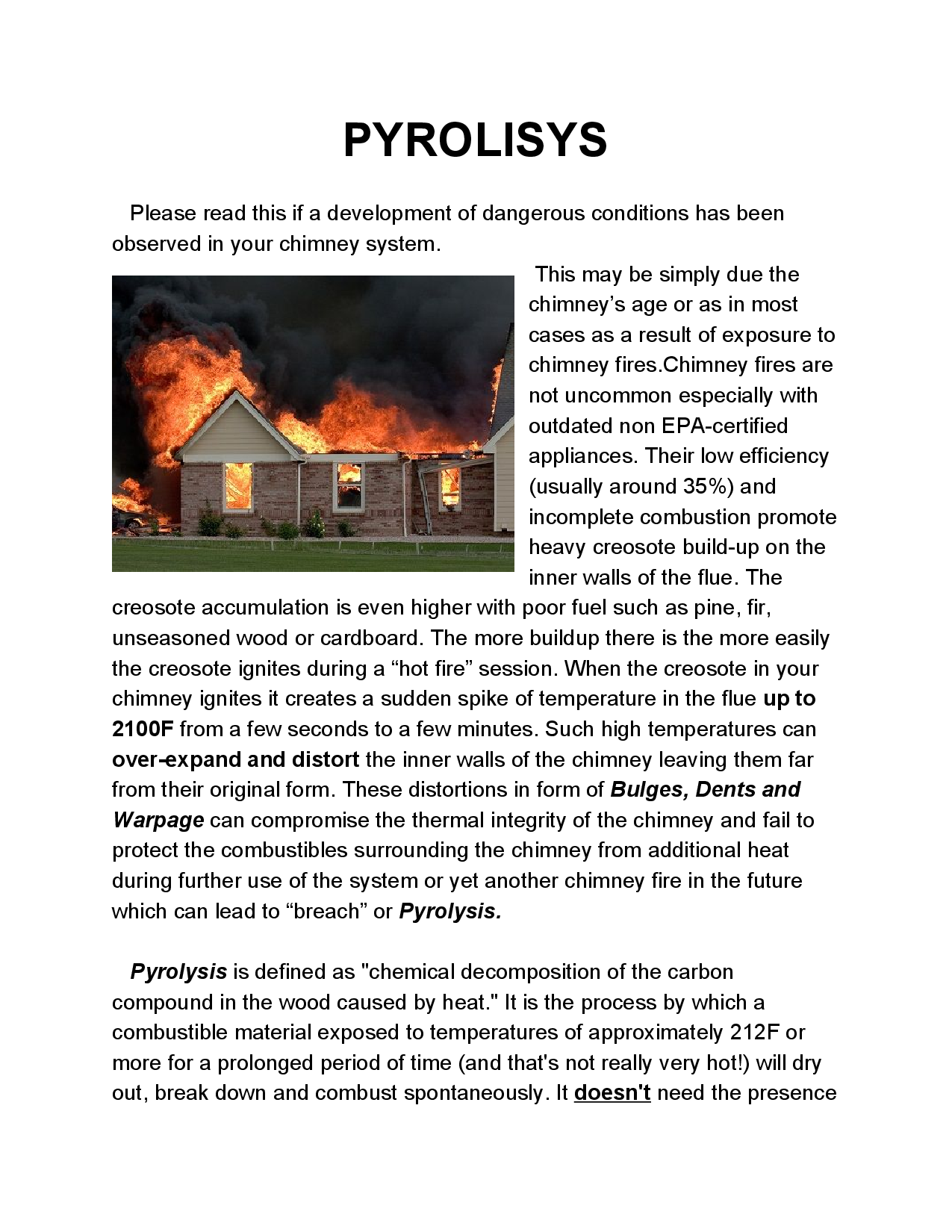
How a chimney gets damaged
This may be simply due to the chimney’s age or, as in most cases, the result of exposure to chimney fires. Chimney fires are not uncommon, especially with outdated non-EPA-certified appliances. Their low efficiency (usually around 35%) and incomplete combustion promote heavy creosote build-up on the inner walls of the flue. The creosote accumulation is even higher with poor fuel such as pine, fir, unseasoned wood or cardboard.
The more buildup there is, the more easily the creosote ignites during a “hot fire” session. When the creosote in your chimney ignites, it creates a sudden spike of temperature in the flue:
Such high temperatures can over-expand and distort the inner walls of the chimney, leaving them far from their original form. These distortions — bulges, dents and warpage — can compromise the thermal integrity of the chimney and fail to protect the combustibles surrounding it from additional heat during further use of the system, or during yet another chimney fire in the future. That can lead to a “breach” or pyrolysis.
What pyrolysis is
Pyrolysis is defined as “chemical decomposition of the carbon compound in the wood caused by heat.” It is the process by which a combustible material exposed to temperatures of approximately 212°F or more for a prolonged period of time (and that’s not really very hot!) will dry out, break down and combust spontaneously.
It doesn’t need the presence of direct flame or spark to ignite, either. It simply needs enough heat and oxygen. Pyrolysis is the cause of over 85 percent of solid fuel-related fires. Chimney fires generate excessive heat that speeds up the pyrolysis process.
Pyrolysis may take years or decades to bring the wood to the point of combustion, so it can be misleading to think that a system that has not had a fire in many years is safe.
Special note: solid-pack, double-wall insulated chimney pipe
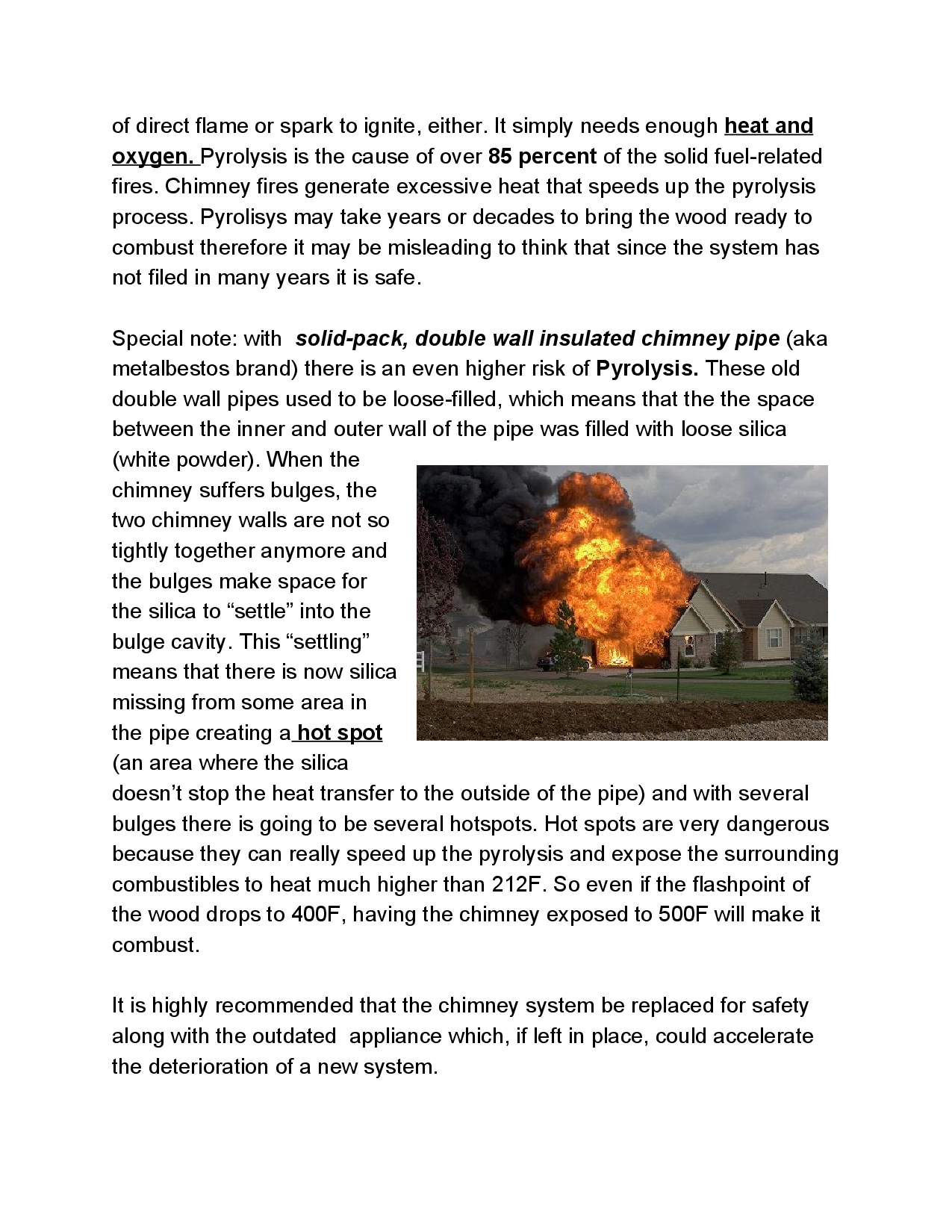
With solid-pack, double-wall insulated chimney pipe (aka Metalbestos brand) there is an even higher risk of pyrolysis. These old double-wall pipes were loose-filled, which means the space between the inner and outer wall of the pipe was filled with loose silica (white powder).
When the chimney suffers bulges, the two chimney walls are no longer tightly together, and the bulges make space for the silica to “settle” into the bulge cavity. This settling means there is now silica missing from some area of the pipe, creating a hot spot — an area where the silica doesn’t stop the heat transfer to the outside of the pipe. With several bulges, there are going to be several hot spots.
Hot spots are very dangerous because they can really speed up pyrolysis and expose the surrounding combustibles to heat much higher than 212°F. So even if the flashpoint of the wood drops to 400°F, having the chimney exposed to 500°F will make it combust.
Our recommendation: It is highly recommended that the chimney system be replaced for safety, along with the outdated appliance which, if left in place, could accelerate the deterioration of a new system.
